

Rusik was the first police sniffer cat in Stavropol, Russia. He worked with the police to sniff out illegally smuggled sturgeon fish. Rusik sadly lost his life in the line of duty in June 2003, a year after he started working. He was hit by a car immediately after searching a bus. Apparently he had found sturgeon in that vehicle before. Some locals believe that Rusik was the object of a contract killing, but this was never proven.

Bhekuli Biya is a traditional Hindu practice originating in Assam, a state in northeast India. This ritual takes place during dry periods in the summer as a sort of prayer for rain. A poem from the Assamese tradition describes how when the farmers asked the clouds why there is no rain, they replied that as long as the frogs don't croak, there won't be any rain. Frogs croak during their mating season which happens only during rainy seasons.
Two frogs are caught, cleaned, and dressed in traditional wedding clothes. Fitting enough, this ceremony is usually performed by an appointed priest or elder of the village. Because of course it does.
Fun fact: During the 2019 Indian floods a frog divorce was performed, for obvious reasons.
Buckle up, because this one’s wild. Literally. (i'm sorry)
It’s August 25, 2010. The airline is Filair, a tiny regional carrier in the Congo. The owner of the airline, Daniel Philemotte was also the pilot of the aircraft. Filair, along with most Congolese carriers, had been blacklisted by the European Union due to safety concerns long before the crash. His co-pilot was Chris Wilson, a 39 year old British man, who had moved to the Congo after giving up his job as a cabin crew member with a British airline to follow his dreams of becoming a commercial pilot. He started working for local company Filair in order to complete his training and carry out the required 1,000 hours needed for his licence. However, he had grown increasingly concerned about the state of the airline and Mr. Philemotte’s flying ability.
In a statement read to the court, Chris’s brother said that every time Chris flew with Mr Philemotte there was always one incident or another. He had said he didn't want to fly with him anymore. He said if it wasn't for the fact they could see where they were going they wouldn't ever get anywhere because Philemotte couldn't read the instruments. "He said he didn't know how Philemotte was still alive, his flying was so bad." Chris also allegedly told his brother that passengers would walk around the plane when they should have their seat belts on, making the craft unstable, and would often bring animals and produce along with them, basically balkan public transport with wings.
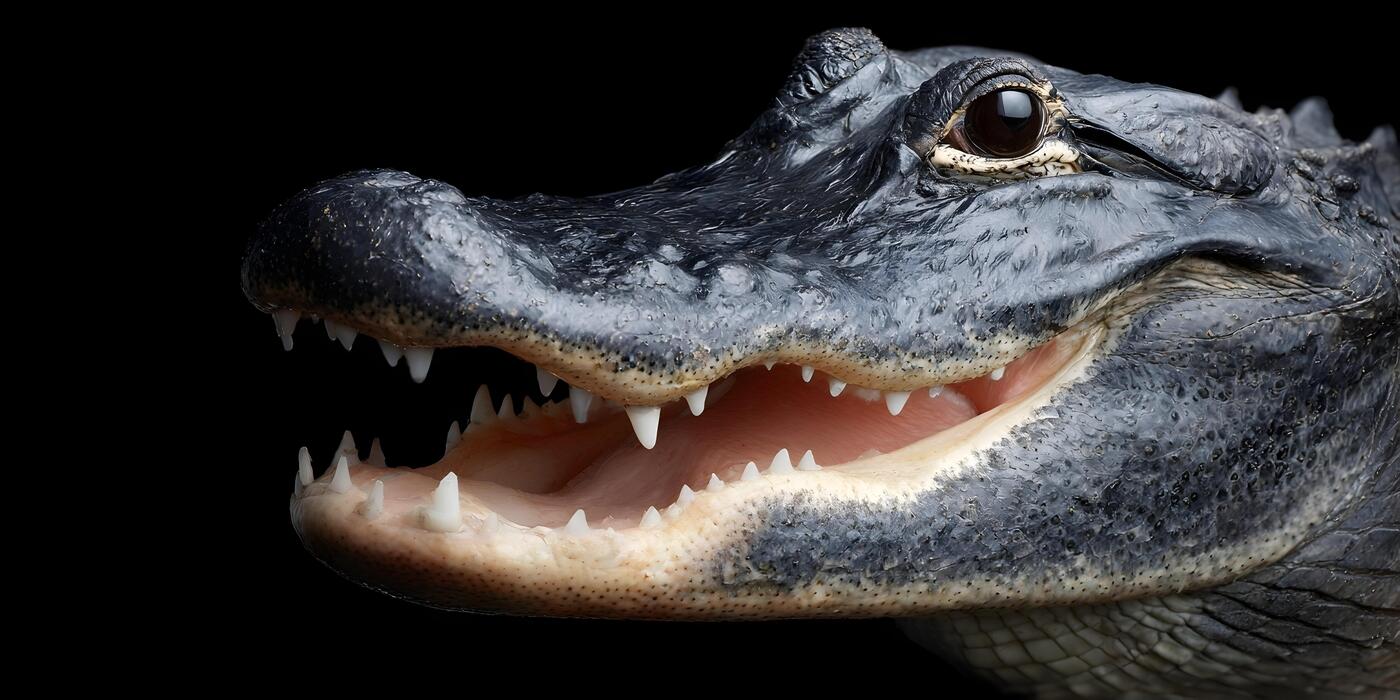
According to the only survivor, someone had smuggled a crocodile onto the plane in a gym bag. And naturally, when people see an apex predator casually strolling down the aisle they lose their minds. Everyone rushed to the front of the plane. The sudden shift in weight caused the plane’s center of gravity to lunch forward. And just like that the plane crashes a few hundred meters from the airport. Obviously this is a very tragic accident, literally everyone except one person lost their lives, but our story does not stop here. Because if you thought the crocodile perished in the crash too, think again.
The crocodile survived. Crocodiles really are upsized cockroaches. They’ve outlived dinosaurs, droughts, and now a literal plane crash.
Rescuers, upon finding this creature among the wreckage, decide that there’s only one reasonable thing to do: They kill it with a machete. Having to suddenly kill a Crocodile inside the ruins of a plane sounds wild, but who carries a machete around just like that? Especially if you are a rescuer, I don’t think you’re expecting to hunt something down with a machete.
Some people say the crash was actually caused by pilot error or running out of fuel. Others say it was because the crocodile got loose. But whether or not the croc is 100% to blame, the conditions for disaster were all there: poor airline safety, unregulated luggage, people smuggling wildlife onto flights. So what do we take away from all of this?
Chaos, when you think about it, is kind of inevitable when human negligence, wild animals, and a machete are all in the same story. Stay safe out there. And leave the exotic animals at home. Unless it’s a capybara. Then we can talk.
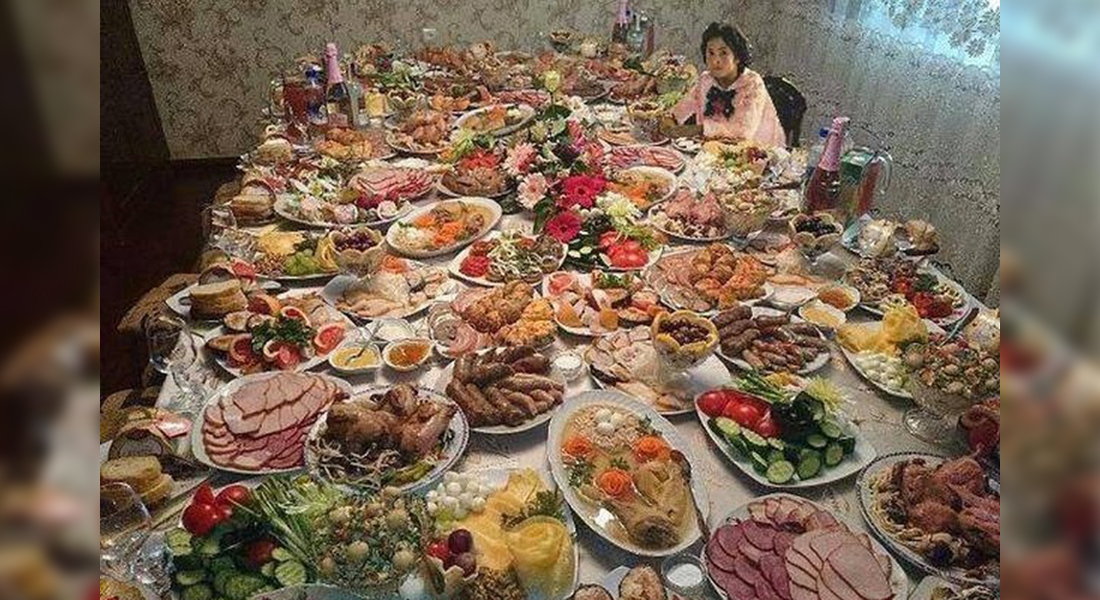
Every culture has that one holiday where the entire family gathers together under the illusion that everyone likes each other. And Slava is exactly just that! Think of it as Thanksgiving, except instead of one awkward dinner, it becomes a marathon of different dates, different houses, alcoholism, family politics, and carrying bottles of wine from apartment to apartment while your mother coaches you how to behave like you're entering a NATO summit. All over the span of a few months.
A Slava is a the feast day of an orthodox saint each family believes is a protector of their house. Each year on the same date, most Serbians prepare to feed all of their family members both close and distant, friends, coworkers, neighbours, friends of their spouses, friends of their parents etc. A common saying is that no one is simply invited to a slava. You just pull up and walk inside.
Preparation begins days earlier. The house quickly enters a state of panic. Tables are extended to impossible lengths using random wooden planks your dad found in the attic. Chairs and plates are often borrowed from friends and neighbors. Your mom is vacuuming aggressively. The tasty food your mom already makes is off limits. Not even a single bite lest you catch these hands! The kitchen turns into a battlefield where women over the age of fifty develop military-level coordination while simultaneously criticizing everyone else’s technique. This would make Gordon Ramsey insanely thrilled. I would sell my kidney to see him witness this controlled chaos.
The “good glasses” emerge from a cabinet like sacred artifacts. The embroidered tablecloth appears. Everyone acts as though the president himself is arriving, when in reality it is Uncle Dragan aka local alcoholic #16, who will spill red wine on the couch within forty minutes.
The first wave consists of punctual elderly relatives carrying cakes wrapped in foil containers that nobody ever gets back. They sit carefully, speak softly, and immediately begin discussing illnesses, funerals, and property disputes. Somewhere in the background, a grandmother has already fallen asleep upright in a chair, television still blaring behind her. This is the calm before the storm.
The second wave is louder. Now the said drunk uncles enter. The volume of their voice increases in direct proportion to the amount of alcohol consumed. Not all of them are alcoholics, but your dad's homemake Rakija WILL make even the most sober man relapse just for a night. Suddenly every conversation becomes political, historical, or deeply personal. Someone mentions Tito. Someone else gets offended. One uncle insists he could have become a professional athlete if not for his knee injury in 1987. No one cares. The aunties ask intrusive and jusgemental questions. This is the worst if you are a teenage girl who has or does not have a boyfriend. Both answers are wrong. The cousins disappeared to smoke two hours ago. You're slightly younger so you're not cool enough to join. You're stuck again. Maybe next year. A child is crying. Your mom is angrily washing dishes despite being repeatedly told not to.
A random child wanders into your room. You say "hey, your mom is looking for you!" She doesn't. It's a common lie. You're trying to protect your bedroom from becoming free real estate for all the 5 year olds.
Your family is overwhelmed. They are mouthing "help" to each other. Your mom is on the brink of a mental breakdown. Everyone is overstimulated and sleep deprived. Eventually the most of the guests leave. Only that one uncle that eats and drinks everything in sight stays. You try to figure out what to say to make him leave. Eventually, he does.
You wash dishes 'till 4 AM and your mom keeps saying she cannot do this again next year. That's a lie. People stop hosting slavas only if someone dies. An injury or an illness is no excuse. Yes you're lowkey forced to do it, but it's such a deeply ingrained tradition that it feels weird to stop.
That's the reveiving end. You still have a couple more slavas to go to as a guest where you eat and make small talk and are questioned detective style by distant aunts. I always loved to go, personally. The food was bomb and when you're a kid you're only expected to be seen and not heard. If nothing else, the food is always amazing, and that's a good enough excuse for slavas to keep being a thing.
Most common slava dates: 19th December (saint Nicholas) 21st November (Archangel Michael), 20th January (st. John the Baptist), 8th November (st. Dimitrius), 27th January (st. Sava) and many more.
The Bosnian Arebica was a variant of the Perso-Arabic script used by Bosnian muslims between the 16th and early 20th century. It was created in order to modify the arabic script to the phonetic system of the Bosnian language.
Works of literature written in Arebica are considered part of the Aljamiado texts (which are essentially manuscripts that used arabic script to transcribe european languages. According to some sources,The practice of Jews writing Romance languages is also referred to as aljamiado.) About 50 books were printed in Arebica. Of the literary works written in Arebica, the ilahiyya (devotional poems) and the qasidas (instructive poems) stand out. A famous love poem called "Hirvat turkisi" was written in Arebica by Mehmed of Erdely. In 1878, Bosnia completely switched to the Latin script, but Arebica continued to be used by Bosniaks, especially in religious services.
During Austro-Hungarian rule, there were unsuccessful efforts by Bosnian Muslims to grant Arebica equal status alongside Latin and Cyrillic script.
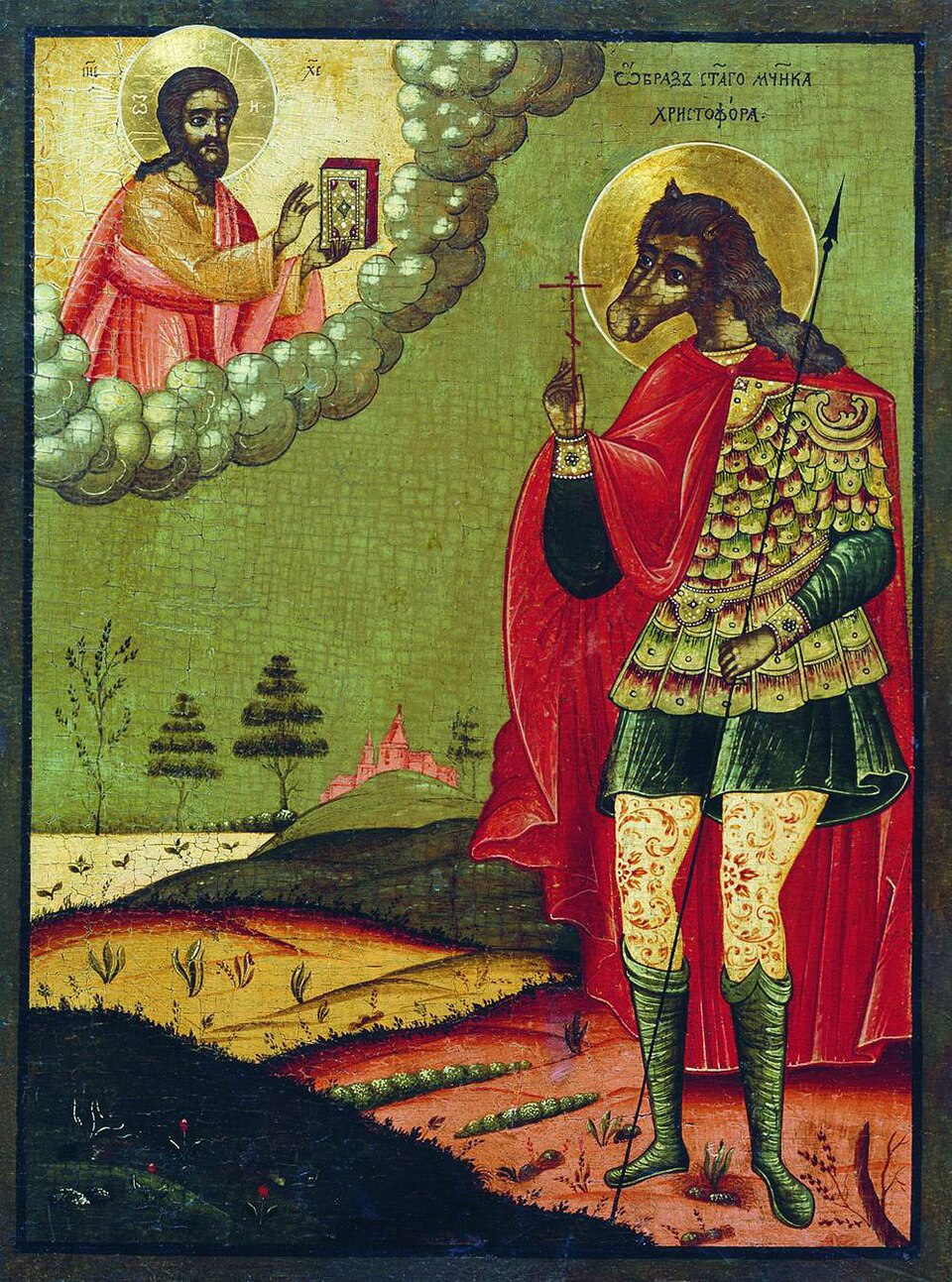
Among the stranger corners of Christian history exists a recurring and deeply confusing question: was Saint Christopher... a dog?
Not metaphorically. Not spiritually. Not in the comforting "golden retriever energy" sense. An actual dog-headed man.
Certain medieval depictions of Saint Christopher portray him not as the familiar broad-shouldered ferryman carrying Christ across the river, but as a cynocephalus: a member of a legendary race of dog-headed people believed by some ancient and medieval writers to inhabit distant lands beyond the known world.
Which raises several theological questions that the Church has, perhaps wisely, chosen not to answer in detail.
Did Saint Christopher bark? Did he wag his tail when experiencing divine joy? Could a saint be distracted from martyrdom by unattended meat?
More importantly: if a dog-headed giant could achieve sainthood, what exactly did medieval Christianity think qualified as human?
The idea sounds absurd to modern audiences, but medieval people inhabited a world where the boundaries between myth, geography, theology, and rumor were remarkably porous. Travelers returned with stories of monstrous races inhabiting distant continents: headless men with faces in their chests, one-legged umbrella people, and cynocephali who supposedly barked instead of speaking.
Saint Christopher appears to have drifted into this strange tradition through a series of linguistic accidents, symbolic interpretations, and medieval enthusiasm for things that sounded spiritually dramatic enough to probably be true.
Some scholars believe the confusion emerged from descriptions of Christopher as a "Canaanite," which through centuries of retelling and mistranslation gradually mutated into associations with canine-headed peoples. Others suggest the imagery was symbolic: the monstrous outsider transformed through faith into a servant of God.
Still, the paintings remain deeply funny.
There is something profoundly surreal about entering an ancient church expecting solemn religious iconography and instead encountering what appears to be a large, holy greyhound carrying the Son of God across a river with complete sincerity.
The medieval world did not always divide the human, the animal, and the mythical as rigidly as modern society does. Sanctity was not necessarily tied to appearing civilized or even fully understandable. In some strange corner of medieval thought, even the creature at the edge of humanity could become holy.
Which may unintentionally make Saint Christopher one of the most comforting saints in existence.
After all, if God can apparently work through a gigantic dog-man ferryman from the edge of the known world, perhaps the requirements for grace are wider than we think.

There is something deeply comforting in knowing that medieval people also looked at rabbits and occasionally thought: what if this creature became an absolute menace to society?
Long before modern cartoons, medieval artists were already turning rabbits into chaotic tricksters. In manuscript margins they steal weapons, attack hunters, kidnap nobles, and generally behave with the confidence of creatures who know the laws of God and man no longer apply to them.
The rabbit itself occupied an unusual symbolic position in medieval Europe. It represented cowardice, fertility, vulnerability, and uncontrolled desire all at once. Transforming such a creature into an armed executioner created an image that was both humorous and deeply uncanny.
Looking through enough marginalia begins to feel strangely familiar. One rabbit points a spear at a knight with the exact same smug energy as Bugs Bunny leaning against a tree asking someone "what's up doc?" before psychologically destroying them for seven consecutive minutes.
The resemblance becomes worse the longer you stare. Bugs Bunny humiliates hunters, breaks authority figures emotionally, survives impossible situations, and treats violence as comedy. Medieval killer rabbits do almost the same thing, only with slightly more public executions.
It is entirely possible that humanity has always found rabbits unsettling. Their softness feels deceptive. They move too quickly, stare too blankly and multiply with biblical efficiency. Perhaps medieval artists understood something modern society forgot: given enough opportunity, rabbits would absolutely overthrow feudal Europe.
In this sense, illuminated manuscripts were not merely decorated books. They were warnings.